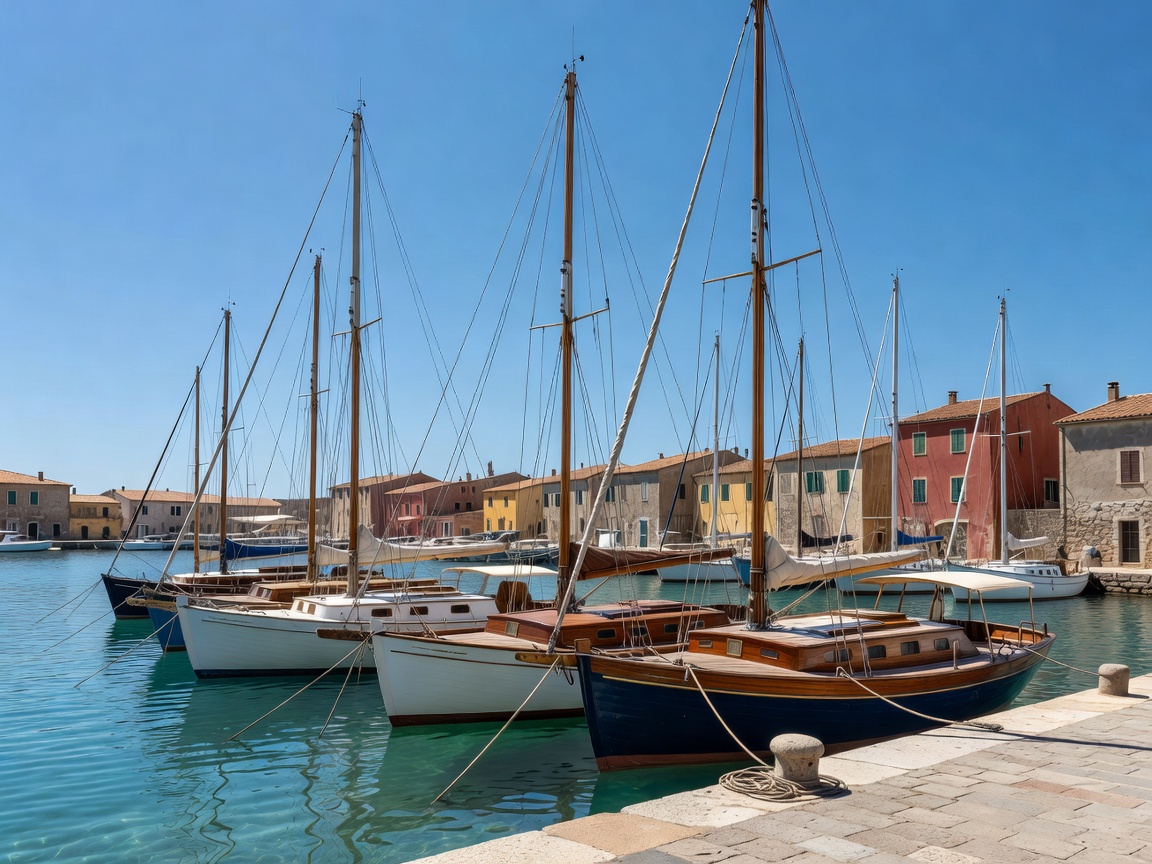
Sardinia is an island shaped by its sailing season. Every spring, charter fleets, private owners and visiting cruisers converge on its coasts, and every autumn a proportion of those boats come up for sale. For buyers working with a budget under €100K, that turnover matters far more than the glamour attached to the Costa Smeralda. The island's listings regularly include sailing yachts from the 1980s to the early 2000s, compact flybridge cruisers and open day boats whose owners are upgrading, relocating or simply ending a chapter.
The older yachts we curate across Italy are all priced below €100K, and a number of current examples sit roughly between €19K and €58K. In Sardinia, that band typically covers smaller production sailboats, tired-but-sound family cruisers and project boats that need cosmetic or mechanical attention. What it rarely buys is a turnkey, recently refitted yacht in a prime Gallura berth, and knowing that from the outset saves a great deal of time.
Where to look around the island
The north-east, taking in Olbia, Marina di Portisco, Cannigione and the La Maddalena archipelago, has the densest concentration of boats and brokers. It is also where asking prices are most influenced by location, so a boat moored here may carry a premium compared with an equivalent hull elsewhere on the island.
The south, centred on Cagliari, is a working city harbour with year-round life, useful yard services and a more local ownership base. The north-west around Alghero and Stintino faces the prevailing maestrale, and boats kept here often carry practical cruising equipment. In the south-west, Carloforte on the island of San Pietro has a strong fishing and sailing culture and occasionally surfaces traditional wooden craft.
| Area | Character | Buyer notes |
|---|---|---|
| Olbia & Portisco | Busy, broker-heavy, close to ferry links | Widest choice; location can lift asking prices |
| Cannigione & La Maddalena | Sheltered cruising grounds | Many season-worked boats; check engine hours |
| Cagliari | City harbour with year-round services | Good access to yards and independent surveyors |
| Alghero & Stintino | Exposed north-west coast | Boats often equipped for heavier weather |
| Carloforte | Island community with fishing heritage | Occasional wooden and traditional boats |
What your budget tends to buy
At the lower end of the range, expect sailing yachts of roughly 8 to 10 metres from high-volume builders such as Beneteau, Jeanneau and Bavaria, or older open motor boats with petrol or diesel sterndrives. These models are plentiful across Europe, which makes spares, class knowledge and owner forums easy to find. Towards the upper end, larger 11 to 12 metre sailing yachts and older flybridge cruisers start to appear, though engine condition quickly becomes the deciding factor for value.
Ex-charter boats deserve a special note. Sardinia's charter industry means some older yachts have spent years working through the season. They are often serviced on a schedule and may come with maintenance records, but they can also have high engine hours, worn upholstery and heavily used winches and sails. Neither a charter history nor its absence is a guarantee; the survey is what counts.
Island-specific considerations
- Sun and salt. Strong UV exposure ages gelcoat, canvas, acrylic windows and exterior teak. Budget for covers and possible replacements.
- Wind. The maestrale can blow hard for days. Rigging, ground tackle and deck fittings deserve close inspection.
- Seasonality. Summer berths are costly and scarce; autumn and winter are generally calmer times to view, survey and negotiate.
- Logistics. Moving a boat to the mainland means a Tyrrhenian crossing under her own power or road-and-ferry transport. Include this in your total cost.
Advantages
- Large, varied supply thanks to seasonal turnover
- Well-known production models with good parts availability
- Outstanding cruising grounds on your doorstep
- Off-season viewings are usually less pressured
Drawbacks
- Location premiums in the north-east
- UV and wind wear accelerate ageing on older boats
- Island logistics add cost to parts, surveys and transport
- High-season berths are expensive and hard to secure
A short pre-purchase checklist
- Ask whether the boat is a natante (generally under 10 metres and not registered) or a registered imbarcazione, and request the matching documents.
- Request proof of ownership history and VAT status, especially for foreign-flagged boats.
- Commission an independent out-of-water survey, including moisture readings on older GRP hulls.
- Carry out a sea trial with engines at full working temperature.
- On sailing yachts, check the age of standing rigging and sails; many surveyors advise periodic rigging replacement.
We publish these guides to help buyers ask better questions. We do not inspect vessels ourselves, and every listing should be verified directly with the seller or broker. If you would like help framing an enquiry, visit our contact page.