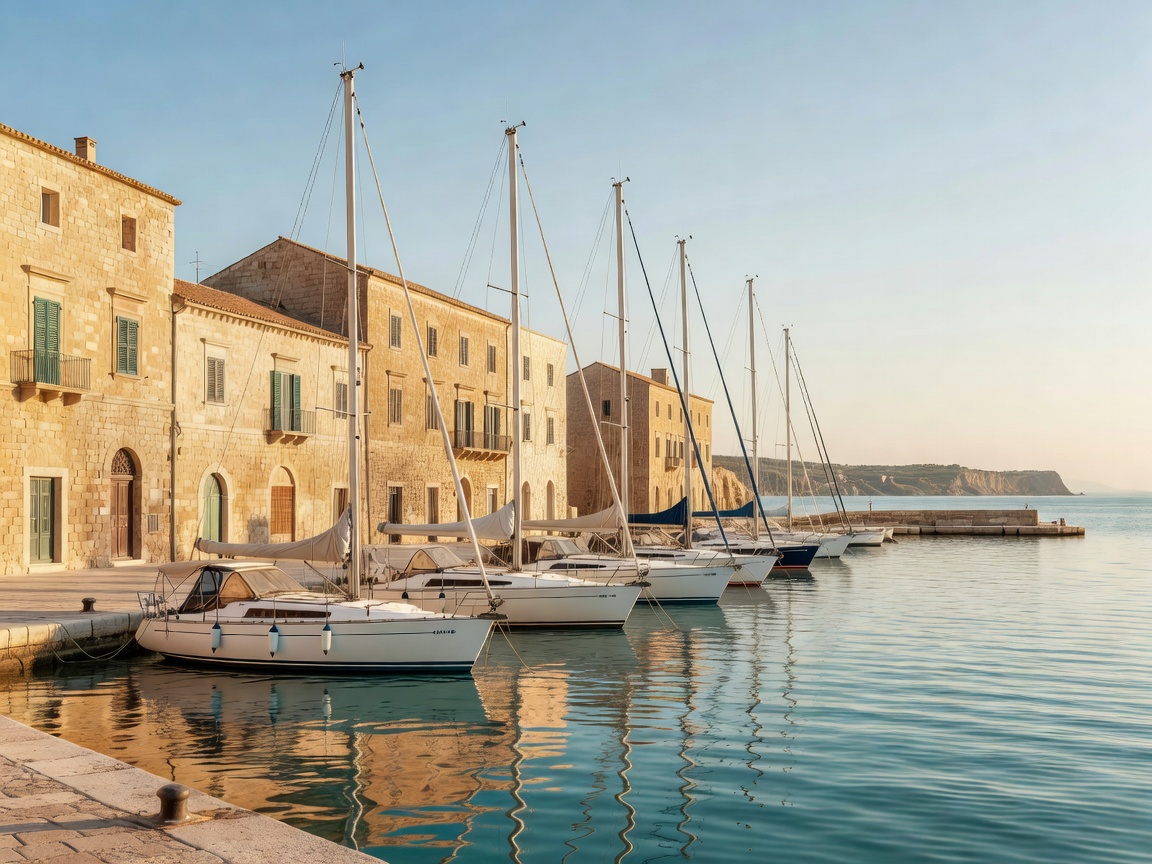
Sicily sits at a crossroads of Mediterranean routes. Boats heading east to Greece, south to Malta or west towards Sardinia and the Balearics pass through its harbours, and some of them never leave. Owners who have wintered here for several seasons sometimes decide to sell locally rather than sail home, which adds a steady stream of well-travelled cruising yachts to a market already served by Sicilian owners and local boatbuilding traditions.
Across our Italy listings, older yachts below €100K are common, and many current examples fall around €19K to €58K. In Sicily, that range can include ocean-going sailing yachts with long equipment lists as well as local open boats and small cabin cruisers. The mix is broad, so filtering by how you actually intend to use the boat is the first and most useful job.
Harbours and their character
Palermo, on the north coast, offers city marinas and yard services, with straightforward travel links for viewings. Further west, Trapani and Marsala give access to the Egadi Islands. The south-east, including Syracuse, Marina di Ragusa and the Marina di Cala del Sole at Licata, is known among cruisers as a wintering area, and it is here that many liveaboard and long-distance boats come to market. Catania and Riposto on the east coast sit beneath Etna, while Milazzo in the north-east is the traditional gateway to the Aeolian Islands.
| Area | Character | Buyer notes |
|---|---|---|
| Palermo | City harbour with strong services | Convenient for viewings, surveys and haul-outs |
| Trapani & Marsala | Western gateway to the Egadi Islands | Mix of local boats and passage-makers |
| Syracuse | Historic, sheltered harbour | Popular stopover for cruising yachts |
| Marina di Ragusa & Licata | Winter liveaboard hubs | Well-equipped cruisers, often foreign-flagged |
| Catania, Riposto & Milazzo | East and north-east coasts | Access to the Etna coast and Aeolian Islands |
What you are likely to find
Long-distance cruising yachts. These boats often arrive fitted with solar panels, extra tankage, self-steering gear, watermakers and heavy ground tackle. Useful equipment can add real value, but it also adds systems to inspect, and gear that has sat unused through a long winter may need servicing before it can be trusted.
Local boats. Sicily's tradition of wooden fishing boats and open motor boats means you will also find small, simple craft suited to coastal days out. These are often priced towards the lower end of the market, but wooden examples need specialist care and a surveyor experienced with timber.
Foreign-flagged boats. If you are buying a boat registered in another country, confirm how it will be transferred or re-registered, and ask for proof that EU VAT has been paid where applicable. An experienced broker or maritime lawyer can explain the specific steps for your situation.
Climate and condition
Sicily's heat is kind to cruising and less kind to neglected boats. Engines need healthy cooling systems, batteries and electronics suffer at high temperatures, and hatch seals and window bedding dry out. On the positive side, the long season means many boats are used regularly, which is often better for machinery than years spent ashore.
Advantages
- Broad mix from ocean cruisers to local open boats
- Wintering communities bring well-equipped yachts to market
- Long sailing season and mild winters
- Excellent base for exploring the central Mediterranean
Drawbacks
- Long distances between harbours make viewings time-consuming
- Foreign-flagged boats can add paperwork
- Heat accelerates wear on systems and seals
- Some smaller harbours have limited specialist services
Planning a viewing trip
Group viewings geographically: the south-east cluster, the western ports and Palermo can each fill a couple of days. Book haul-out slots early in spring, when yards are busiest, and allow time between viewing and survey so that you are not making decisions under pressure.
- Shortlist boats by intended use: coastal hopping, island cruising or longer passages.
- Confirm the flag, registration documents and VAT position before travelling.
- Commission an independent survey with haul-out, and a separate engine inspection if hours are high.
- Test every installed system, from watermaker to windlass, during the sea trial.
- Clarify whether the current berth can be transferred and at what cost.
Our guides describe categories and selection criteria; we do not survey or test vessels, and every listing detail should be confirmed with the seller or broker. For help framing an enquiry, get in touch.